
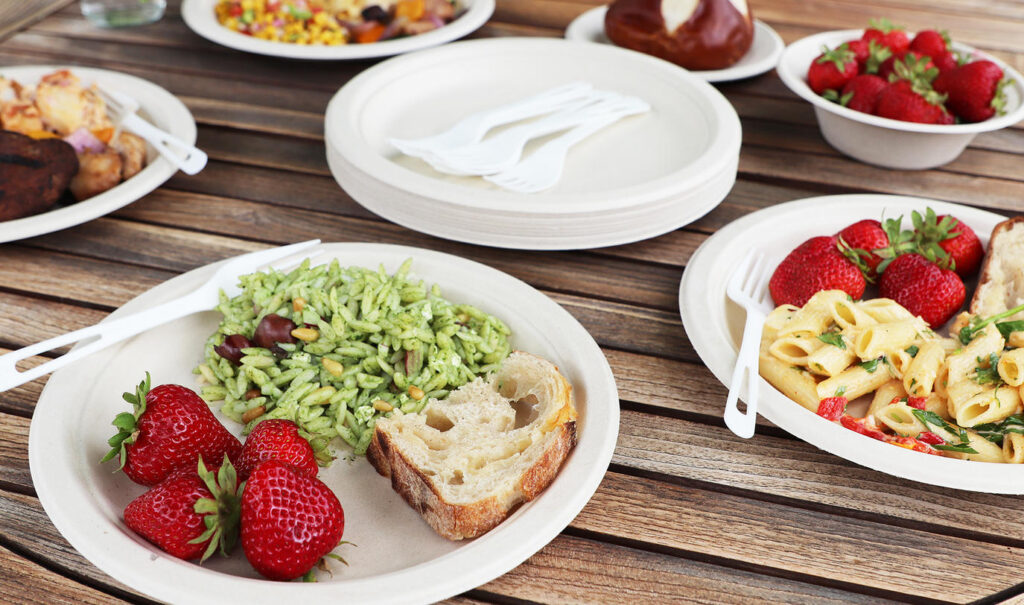
Let’s face it, outdoor entertaining can be wasteful. From disposable plates and cutlery to food waste that ends up in the trash, getting together with family and friends can turn into a mountain of garbage.
With the summer barbecue season upon us, it’s time to think about greening your entertaining. With a few small changes, your celebrations can be lighter on the planet and just as festive.

Serve Sustainably

If you’re hosting a picnic or backyard barbecue, use compostable tableware. World Centric plates, cutlery, and cups are all commercially compostable and available at Whole Foods, Target, and Sprouts Farmers Market stores nationwide.
Grill More Plants

Barbecuing is a beloved summer tradition, but it often revolves around meat-heavy menus. The livestock farming required to produce all that meat takes a toll on the environment. This summer, consider swapping in more plant-based options like veggie burgers, grilled tofu, or colorful vegetable skewers. It’s an easy way to reduce your environmental impact—without sacrificing flavor. Find some great recipes here.
Green the Grill

If you have a charcoal grill, try natural lump charcoal instead of briquets, available at many home improvement stores. Lump charcoal doesn’t contain additives that can emit pollution when burned. Gas grills are a better choice as they produce far less carbon dioxide and are more energy-efficient, with a natural gas grill being the most environmentally friendly option.
Put Down the Fireworks

The EPA estimates that Americans will set off over 268 million pounds of fireworks on July 4th. That’s a lot of packaging that ends up in lanfills on July 5th. Plus fireworks can cause a spike in air pollution. One study in the Atmospheric Environment Journal found that the level of particulate matter present in the air is 42% higher on July 4th across the U.S.
Natural Decor

Avoid purchasing new decorations that are often made from plastic and will go straight to the landfill. Instead, use what you already have to decorate such as festive tablecloths or string lights from the winter holidays. You can also incorporate natural decorations such as flowers, potted plants or a bowl of ripe fruit.
Shop Local

Buy fruits, vegetables and other foods from your local farmer’s market or CSA. Not only will you be supporting local farmers, you’ll also be reducing your carbon footprint by cutting down on the distance your food needs to travel to reach you. Don’t know if you have a local farmer’s market? check the USDA website to find one near you.
Divert Your Waste

Set up proper waste bins ahead of time so waste can be safely collected and easily sorted. Make sure your bins are clearly labeled for compost, recycling and trash so there’s no confusion.